Stem Cell Therapy in Korea: What American Patients Need to Know in 2026
Stem cell therapy is one of the fastest-growing treatments in Korean medicine. American patients are traveling to Seoul for applications in orthopedics, neurology, and anti-aging — treatments that are either unavailable or prohibitively expensive in the United States.
South Korea has emerged as one of the world's most active environments for regenerative medicine research and clinical application. The country's investment in biotechnology, combined with a regulatory framework that allows certain stem cell therapies to be offered clinically while still under research protocols, has created conditions that are simply not replicated in most Western markets.
Korean universities and hospital research centers have produced a significant volume of peer-reviewed regenerative medicine research over the past decade. Institutions like Seoul National University Hospital and Asan Medical Center operate active clinical programs in areas ranging from cartilage regeneration to neurological applications. This is not a fringe medical scene — it is mainstream Korean academic medicine moving faster than US regulatory timelines allow.
In 2026, stem cell therapy ranks as the #1 trending treatment among international patients seeking emerging therapies in Korea. The primary draw areas are orthopedics, neurology, and aesthetic anti-aging — each for different reasons, and with different evidence bases that patients should understand clearly before making decisions.
What Stem Cell Therapy Is Used For in Korea
Orthopedic Applications
Mesenchymal stem cell (MSC) therapy for joint conditions — particularly knee and hip osteoarthritis — is among the most established applications in Korean clinical practice. The treatment typically involves harvesting stem cells from the patient's own bone marrow or adipose tissue, processing them, and injecting them directly into the affected joint. Clinical results published in Korean and international journals have shown meaningful pain reduction and improved mobility in select patient populations. This is not a replacement for joint replacement surgery in all cases, but for patients seeking to delay surgical intervention or manage moderate-stage arthritis, it represents a real clinical option that is not broadly available in the US.
Neurological Applications
Neurological applications of stem cell therapy in Korea include ongoing clinical research for conditions such as stroke recovery, spinal cord injury, ALS, and Parkinson's disease. It is important to state clearly: these are largely research-stage applications. While some Korean hospitals offer them within clinical trial or compassionate use frameworks, patients should enter this space with careful diligence about the specific evidence level of any protocol being proposed.
Anti-Aging and Aesthetic Applications
Exosome therapy and stem cell-derived growth factor treatments have gained traction in Korean aesthetic medicine, particularly for skin rejuvenation and hair restoration. These applications sit at the intersection of Korean dermatology's technological culture and regenerative medicine. The evidence base for cosmetic stem cell applications is still developing, but the treatments are physician-administered and subject to Korean clinical standards.
"Korea's regulatory environment for regenerative medicine is structured to enable innovation while maintaining safety standards — giving practitioners more tools than their US counterparts currently have access to."
The Cost Comparison
In the United States, stem cell therapy for orthopedic conditions — where it is available at all — typically costs between $5,000 and $15,000 per treatment session, is almost universally excluded from insurance coverage, and is often offered in limited clinical settings. In Korea, equivalent protocols at reputable hospitals typically cost 60 to 80% less, depending on the application, the source of cells, and the institution.
The cost differential is substantial enough that patients who have been quoted US pricing are often surprised by Korean equivalents even after accounting for flights and accommodation. When combined with the broader infrastructure of Seoul's international-facing hospitals, the value proposition becomes significant for patients who are already considering the treatment.
60-80%
Cost Reduction vs. US
Comparable protocols
#1
Trending Treatment 2026
International patient data
30+
US Cities with Direct Flights
Incheon Airport
2.0M
Total Intl. Patients 2025
Korea MoHW, April 2026
The Regulatory Gap: FDA vs. Korea's MFDS
One of the most important distinctions for American patients to understand is the regulatory difference between the United States and South Korea. In the US, stem cell therapies for orthopedic conditions — including knee cartilage regeneration — have not received FDA approval for commercial clinical use. While numerous clinics across the country offer stem cell injections, these operate largely outside formal FDA oversight, with no standardized requirements for cell source, preparation quality, or clinical efficacy. Patients are often paying out of pocket for procedures that carry no government-validated standard.
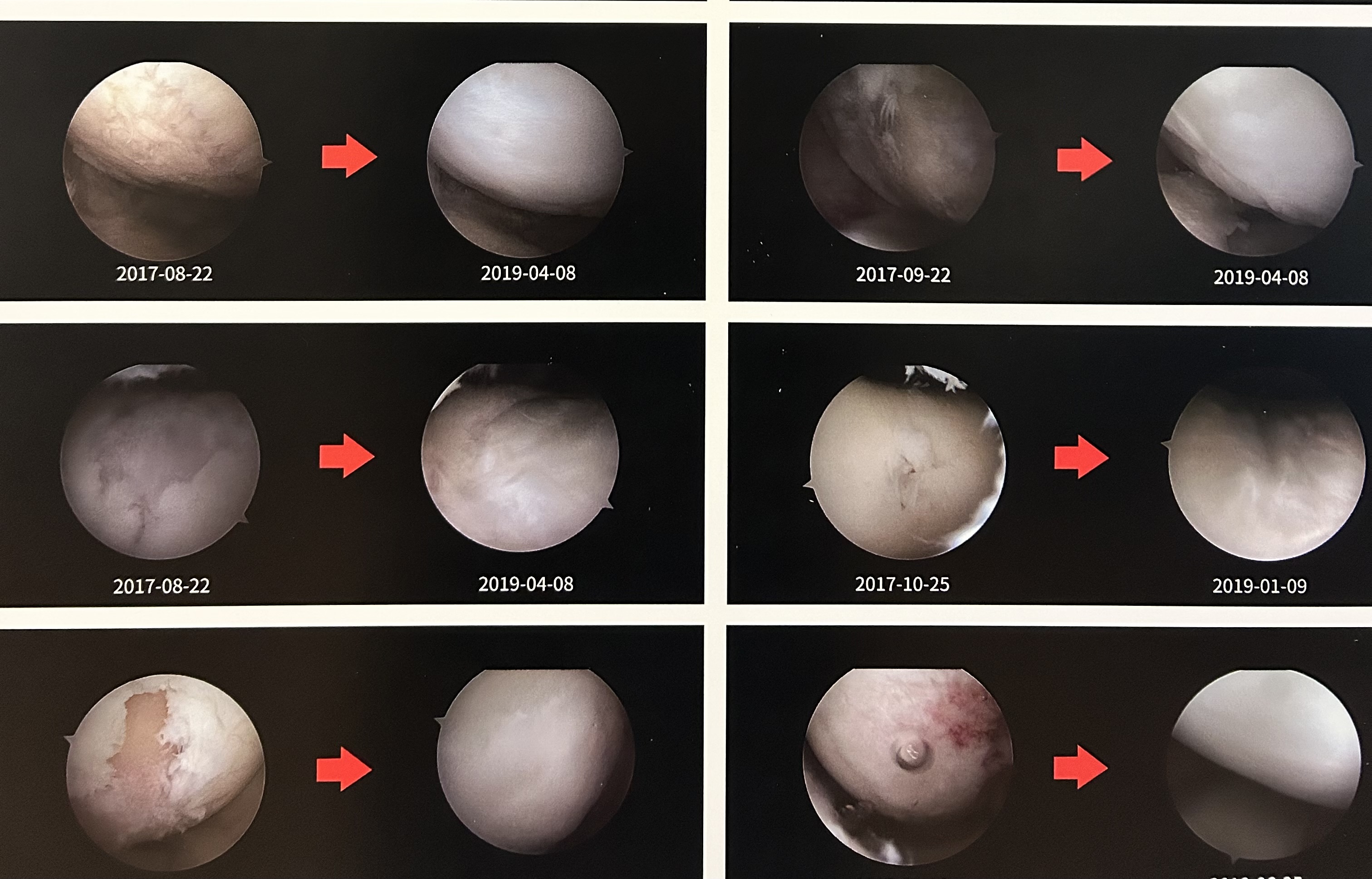
South Korea took a different path. In 2012, Korea's Ministry of Food and Drug Safety (식약처, MFDS) granted full regulatory approval to Cartistem (카티스템) — a stem cell therapeutic derived from umbilical cord blood-derived mesenchymal stem cells, developed by Korean biopharmaceutical company Medipost. Cartistem is specifically approved for the treatment of knee cartilage defects caused by degenerative osteoarthritis, making it one of the world's first government-approved allogeneic stem cell therapeutics for cartilage regeneration. This treatment remains unavailable for commercial use in the United States.
The significance of this cannot be overstated. When a stem cell treatment carries government regulatory approval, patients can verify the cell source, the manufacturing standards, and the clinical evidence behind it. That level of accountability is what separates Korea's regulatory environment from the largely uncontrolled landscape of stem cell clinics operating in the US today.
Spotlight: Gangnam JS Hospital — A Global Center for Cartilage Regeneration
Among Korean hospitals specializing in regenerative orthopedics, Gangnam JS Hospital (강남제이에스병원), located in the heart of Gangnam, Seoul, occupies a position that few institutions worldwide can match. The hospital has performed over 3,000 Cartistem-based knee cartilage regeneration procedures — the highest case volume for this specific treatment of any center in the world.
The hospital's name entered global sports medicine recognition when Guus Hiddink — the Dutch coach who led South Korea's national football team to a historic semi-final finish at the 2002 FIFA World Cup — chose Gangnam JS Hospital for bilateral knee procedures. For a figure of Hiddink's stature and global medical access to select this institution speaks directly to the level of clinical confidence it had earned.
That trust has extended far beyond the world of sport. Gangnam JS Hospital has also treated members of Middle Eastern royal families — patients who have access to the world's finest medical institutions and specifically traveled to Seoul for this procedure. When patients at this level of access and resources make that choice, it reflects meaningful confidence in both the therapy and the team delivering it.
"Not all stem cells are equal — and the source matters profoundly. Cartistem's umbilical cord blood origin, manufactured under MFDS pharmaceutical standards, represents a level of consistency and accountability that unregulated stem cell clinics simply cannot offer."
The cell source question is not a technical footnote — it is central to the safety and efficacy profile of any stem cell treatment. Cartistem cells are derived from umbilical cord blood, an ethically sourced and clinically validated starting material. The manufacturing process is standardized under Korean pharmaceutical regulations, meaning every batch meets the same rigorous quality benchmarks. This is precisely what differentiates a government-approved cell therapeutic from the uncontrolled injections offered at many unregulated clinics. Patients evaluating stem cell treatment anywhere in the world should always ask: where did the cells come from, how were they processed, and what regulatory body has reviewed the evidence?
What to Look for in a Korean Stem Cell Clinic
Quality in Korean stem cell therapy, as in any specialized medical field, varies significantly by institution. Before committing to any clinic, patients should verify the following: the treating physician holds board certification in a relevant specialty (orthopedics, neurology, or dermatology as applicable); the facility is licensed by the Korean Ministry of Food and Drug Safety for the specific cell therapy being administered; published clinical data or trial registrations exist for the specific protocol; and the clinic provides detailed written documentation of the treatment plan, cell source, preparation process, and expected outcomes.
The presence of JCI (Joint Commission International) accreditation at the hospital level is a meaningful baseline quality indicator. Major Korean hospitals with international patient centers can provide documentation and answer these questions directly.
Important Caveats
Evidence levels vary significantly across stem cell applications. Orthopedic applications for osteoarthritis have the most developed evidence base in peer-reviewed literature. Neurological applications are largely research-stage. Aesthetic applications are the least clinically validated. Patients should ask any clinic to provide specific published evidence for the exact protocol being proposed — not general stem cell research — before proceeding. Claims that are not backed by published data or registered clinical trials should be treated with significant caution regardless of the country of treatment.
For broader context on Korea's medical system and why it attracts patients for a range of treatments, see our overview of why 2 million international patients chose Korea in 2025. If you are exploring whether stem cell therapy in Korea might be right for your situation, our team can help you identify appropriate institutions and ask the right questions — that is precisely what our patient navigation services are designed for.
This article is for informational purposes only and does not constitute medical advice or a recommendation for any specific treatment. Stem cell therapies vary significantly in their evidence base and regulatory status. Always consult a qualified physician before making treatment decisions.
Frequently Asked Questions
Korea has approved several stem cell therapies through its MFDS regulatory process, including Medipost's Cartistem — the world's first allogeneic umbilical cord blood-derived stem cell therapy, approved for cartilage defects from injury or degenerative osteoarthritis.
Not necessarily. A stem cell therapy being approved and used in Korea does not mean it is FDA-approved or legally available in the US — regulatory status varies by country and should be confirmed for your specific situation.
Yes. Stem cell therapies used clinically in Korea go through MFDS (Ministry of Food and Drug Safety) approval for specific indications, distinct from unregulated stem cell clinics that have drawn scrutiny in some markets.
Sources
Ministry of Health and Welfare (Korea) — International Medical Tourism Statistics, April 2026
Note: Treatment protocol and international patient volume figures reflect KoreMed's direct experience working with partner clinics and are not drawn from a single published external study; treat as directional rather than a formal statistic.
We don't take a commission on patients. We start from the procedure, find the specialist with the best record in it, and connect you to that hospital directly. If we don't think travelling to Korea is right for your case, we'll say so.
The statistics and medical information on this page are drawn from peer-reviewed research and recognised institutions, including the Korea Central Cancer Registry, the American Cancer Society, the Korea Health Industry Development Institute and the OECD. This content is informational only. It is not medical advice, a diagnosis, or a treatment recommendation. Outcomes vary by individual. KoreMed Consulting Group, Inc. is a marketing and consulting agency, not a licensed medical provider. For medical decisions, consult a licensed healthcare professional.