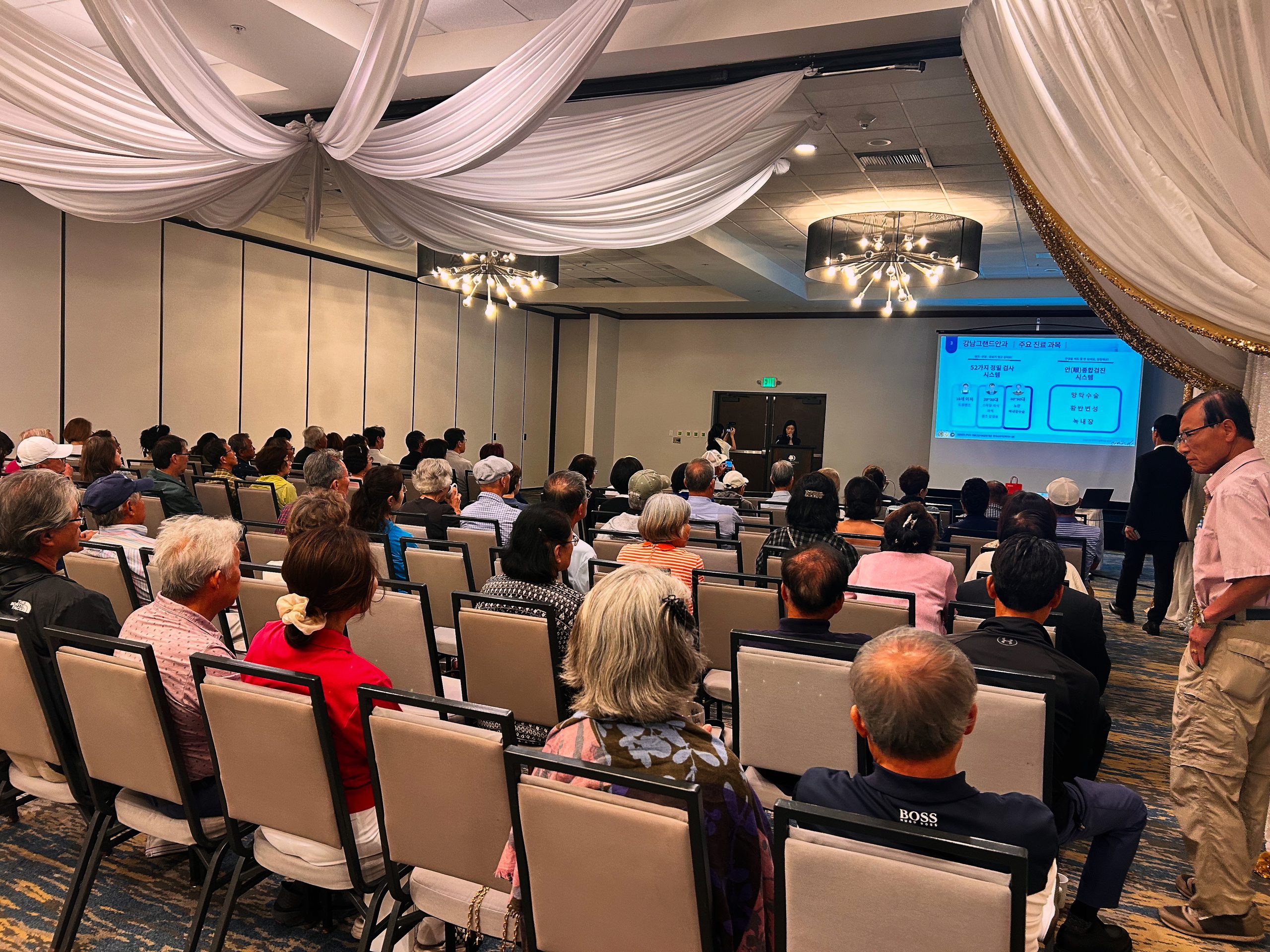
A 70.4% increase in a single year is not a trend. It is a signal. The 173,000 American patients who visited Korean hospitals in 2025 represent one of the most significant patient flow developments in global medical tourism — and the growth shows no sign of plateauing. Behind that number is a straightforward story: American patients have discovered that Korea's healthcare system offers something the US market has consistently failed to deliver, which is high-quality care at accessible prices, without the access friction that defines the American patient experience.
This article explains why that discovery is happening now, what specifically drives Americans to choose Korea across different medical specialties, and what the experience of Korean medical care actually looks like for an international patient in 2026.
Source: Korea Health Industry Development Institute (KHIDI), 2025 Foreign Patient Statistics
What drove the surge? Several intersecting forces. The K-culture wave — Korean entertainment, beauty, and food — has dramatically raised Western familiarity with and comfort around Korean institutions. Patients who began exploring Korean skincare recommendations from Korean dermatologists on social media found themselves discovering Korean medical capabilities more broadly. Word of mouth among patients who returned from Korea with strong experiences accelerated the process. And the ongoing deterioration of the American healthcare experience — rising costs, longer wait times, insurance bureaucracy — has lowered the psychological threshold for considering international care.
Korean healthcare costs 30–70% less than equivalent US care across most procedures — not because quality is lower, but because the cost structures of the Korean healthcare system differ fundamentally from the American one. A filler treatment that costs $900 per ml in the US costs $109–217 in Korea. A knee replacement that costs $30,000–$50,000 out of pocket in the US costs $5,100–$8,700 at a Korean academic medical center. These are not outlier prices; they are routine market rates at reputable Korean hospitals and clinics.
Korean cancer survival rates for prostate (96.9%), breast (94.7%), and thyroid (100.2%) cancer are internationally competitive, based on OECD Health Statistics and KHIDI data. Korean orthopedic centers at Asan and Samsung Medical Centers perform robotic joint replacements at volumes comparable to leading US orthopedic hospitals. Korean dermatology serves over 1.3 million foreign patients annually. These numbers reflect a system whose quality has been validated at scale — not a boutique offering dependent on a single exceptional provider.
Same-week appointments at specialist-level Korean clinics are routine. Patients who arrive in Seoul can typically be seen, evaluated, and begin treatment within days. For American patients accustomed to weeks-long waits for dermatology, months-long waits for orthopedic surgical consultation, or multi-step insurance authorization processes before cancer treatment can begin, the access speed of the Korean system is a material difference — not just a convenience.
Some treatments available in Korea have not yet cleared FDA review in the United States. Rejuran (PDRN injectables), certain exosome-based skin treatments, and specific botulinum toxin formulations with long track records in Korean clinical practice fall into this category. Korean robotic surgery programs are also well-resourced. For patients specifically seeking access to treatment options that their home market does not offer, Korea represents a legitimate option beyond what their US providers can provide.
For decades, the perception of "medical tourism" in American consciousness carried an implicit quality discount — the idea that traveling for care meant accepting lower standards. The data from Korea doesn't support that narrative. In multiple specialties and outcome categories, Korean medical care competes with or exceeds US benchmarks. The reputation is now supported by published evidence, and the patients who discover this tend to have strong experiences that drive further word of mouth.
Among American patients in Korea in 2025, dermatology was the leading specialty — accounting for 44.3% of US patient visits — driven by demand for Botox, fillers, laser treatments, and emerging skin care modalities at a fraction of US prices. Internal medicine and health screening accounted for 13.2%, reflecting demand for Korea's comprehensive executive health check programs. Plastic surgery accounted for 9.3% of American patient visits, with rhinoplasty, double eyelid surgery, and facial contouring among the most commonly sought procedures.
Cancer care and orthopedic surgery, while smaller in percentage terms for the American patient segment, represent the highest-value cases in terms of per-patient spend and decision significance — and these are the areas where the financial and quality arguments for Korean care are arguably strongest for patients facing major procedures with significant US out-of-pocket exposure.
Korea's major hospitals and clinic networks have invested substantially in international patient infrastructure. English-speaking patient coordinators are standard at international departments of major hospitals. Interpretation services are available for consultations at most large facilities. Administrative processes — appointment scheduling, result delivery, discharge documentation — are increasingly available in English through digital platforms.
Logistically, Seoul is a well-connected city. Direct flights from the US West Coast to Incheon International Airport operate daily, with flight times of approximately 10–12 hours. Accommodation ranging from economy to luxury is available near all major medical clusters. Korea's public transportation is extensive, reliable, and navigable in English. The overall experience of being a medical visitor in Seoul has improved materially as the infrastructure built to support 2 million annual foreign patients has matured.
"The patients who discover Korean medicine tend to ask the same thing afterward: why didn't anyone tell me about this sooner?"
Despite the growth in patient numbers, Korean medical capabilities remain significantly underrepresented in American media. The surge in American patients traveling to Korea is largely a word-of-mouth and social media phenomenon rather than something covered by mainstream US health media outlets, which have been slow to investigate Korean healthcare quality with the rigor it deserves. This information asymmetry is narrowing — but it means that most American patients who would benefit from knowing about Korean medical options have still never encountered that information through conventional channels.
This is precisely the gap that KoreMed Consulting Group was built to address. We work on both sides of the Korea-US medical information divide: helping Korean hospitals and clinics develop the media strategy, digital infrastructure, and patient-facing communications needed to reach American patients effectively, and helping American patients navigate the Korean medical landscape with accurate, verified information.
KoreMed Consulting Group provides media strategy and patient acquisition services for Korean medical institutions seeking to reach American patients. We also provide guidance directly to American individuals and families exploring Korean medical care options.
If you are exploring what Korean medical care might mean for you or your organization, the conversation starts here. Reach out to our team — we work with a wide range of inquiries, from individual patient questions to institutional partnerships with Korean hospitals and clinic networks.
173,000 American patients chose Korean hospitals in 2025, a 70.4% increase in a single year, driven by a combination of cost, faster scheduling, and outcomes data in cancer care, dermatology, plastic surgery, orthopedics, and health screenings. (Source: KHIDI, 2025 Foreign Patient Statistics)
Based on 2025 patient volume, the leading categories include dermatology, cancer care, plastic surgery, orthopedic surgery, and comprehensive health screenings.
The growth has accelerated sharply in recent years — total international patients to Korea rose from 605,768 in 2023 to over 2 million in 2025. (Source: Ministry of Health and Welfare, Korea)
We don't take a commission on patients. We start from the procedure, find the specialist with the best record in it, and connect you to that hospital directly. If we don't think travelling to Korea is right for your case, we'll say so.
Submit an Inquiry info@koremedconsulting.comThe statistics and medical information on this page are drawn from peer-reviewed research and recognised institutions, including the Korea Central Cancer Registry, the American Cancer Society, the Korea Health Industry Development Institute and the OECD. This content is informational only. It is not medical advice, a diagnosis, or a treatment recommendation. Outcomes vary by individual. KoreMed Consulting Group, Inc. is a marketing and consulting agency, not a licensed medical provider. For medical decisions, consult a licensed healthcare professional.